

Traditional smuggling (I)
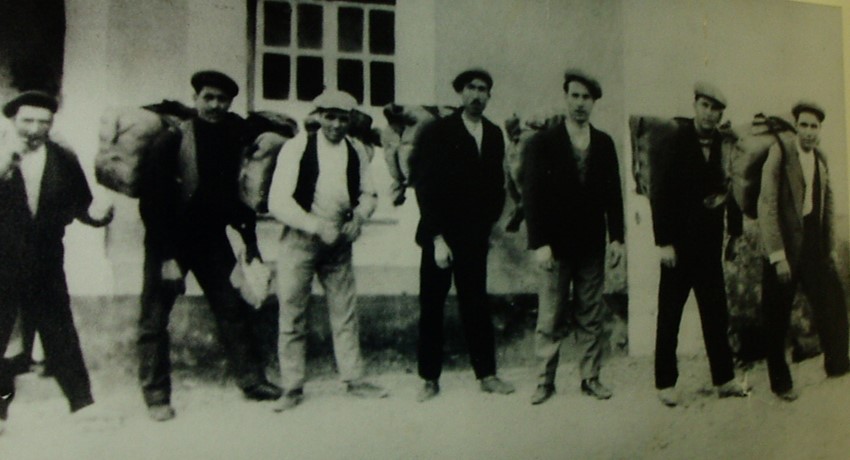
Gangs of smugglers formed following a number of formulas ranging from (more or less) stable groups who were well-organised on horseback or on foot to a wide variety of intermediate formations: father and son, brothers, brothers-in law, mixed sex gangs –one man and several women, several men and several women- or several people who were not a gang. Many of these groups were formed by chance or occasionally. They were not designed to last and were rather sporadic. Others resisted the passing of time and adversity.
The gangs differed either in numbers —from minigangs of only three to macrogangs of forty, fifty and even sixty— nationality —some were made up of Spanish backpackers, others of Portuguese, others were mixed— gender —the vast majority were male gangs, although there were gangs of women and, exceptionally, it seems that some women were members of male gangs-.
Gangs also differed in the means of transport they used. There were gangs on foot and gangs on horseback, and mixed gangs of smugglers both on foot and on horseback. If we had to choose among the wide variety of different structures and organisation, we would go for the gangs on foot as this was the preferred way of organising traditional smuggling along the interior border, without belittling the others we have mentioned.