

Traditional life on the border (II)
Traditional smuggling is a kind of contraband, carried out by the border folk since the origins of the border itself. Traditional smuggling, and by extension, all smuggling, is the most eloquent real transgression of the border, violating the laws and demarcations established by the two states (which are defended by the representatives of institutionalised power on the border) while also evading the payment of the corresponding taxes to the respective treasuries. Traditional smuggling is, in addition, a unique phenomenon, polysemic, ambiguous and paradoxical, typified by generating a variety of complex situations, often contradictory, which makes it difficult or impossible to interpret or understand it in linear terms.
Once smuggling was taken up as a regular activity, it imposed, to a great extent, a way of life, even a certain character. Nevertheless, the typical personality, habits and customs of most of the backpackers, porters and occasional smugglers were similar to those of the average resident in the community.
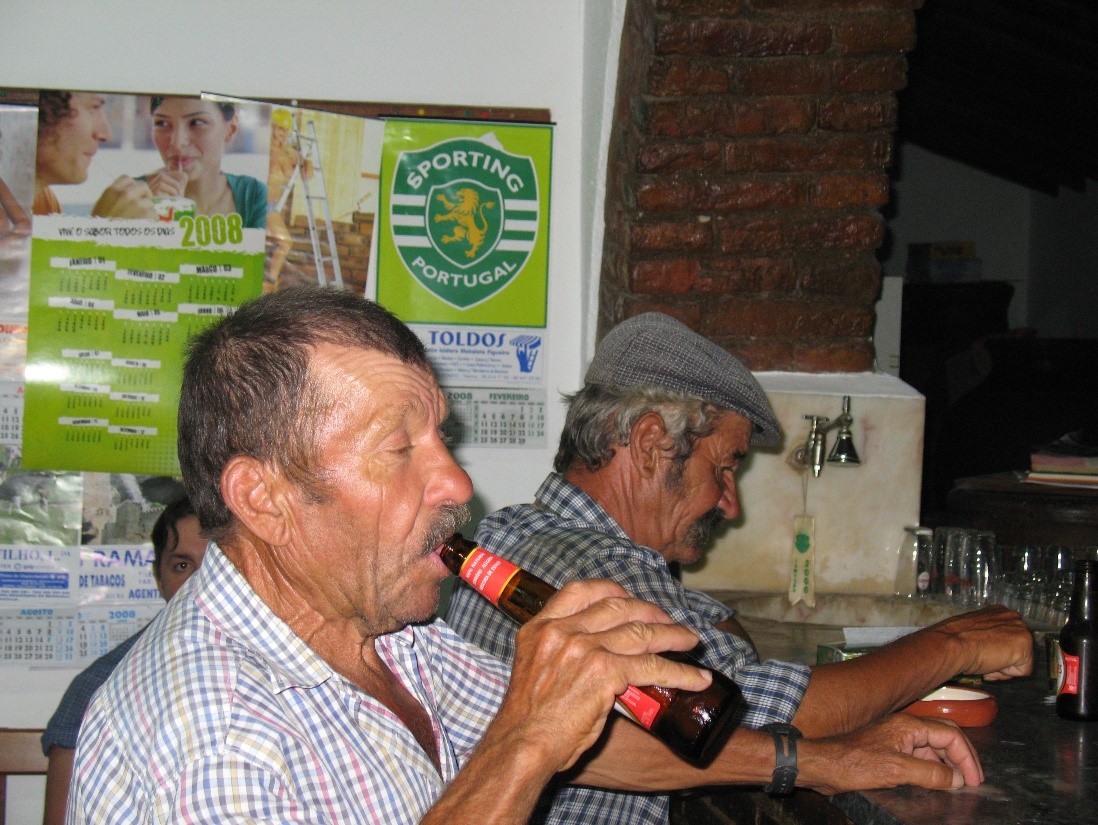
In border settlements like Ayamonte, Villarreal de Santo Antonio, Jabugo, Alcoutim, Paymogo, Barrancos, Cheles, Olivenza, Badajoz, Elvas, Campomaior, La Codosera, Zarza la Mayor, Salvatierra do Extremo, Arronches, Esperança,Valencia de Alcántara, Valverde del Fresno, Eljas, Penha García, Soito, Quadrazais, San Julião, etc., on both sides of the border, smugglers —as shown in the photo— were many and tended to live in groups. In some of these enclaves a particular subculture of smuggling seems to have existed.