

Smuggling as heritage
Along the border between Spain and Portugal we find, along with scattered and/or fragmented local identities, many original processes of heritage appropriation, where the border itself appears, together with traditional smuggling, as a very important reference and a source of inspiration when exploring new ways of being and living on the border.
As examples we have the many references to the border and to smuggling scattered in particular across Portuguese literature, in the shape of romances, stories, poems novels… some of them set to music and/or adapted for the cinema; documentaries and research studies such as this one, museum exhibitions such as: el Museu do Río in Alcoutim (district of Faro), the Museum of Smuggling in Santana de Cambas (in Mértola), the Centre for the Interpretation of Frontiers in Oliva de la Frontera (Badajoz), the Museu do Café de Campomaior, the Museu do Pão en Seia (in Serra da Estrela), the Museu do Contrabando de Quadrazais (in Sabugal), the Centre for the Interpretation and la Ruta del Contrabando de Cidadela (Ourense), the Museu do Smuggling and Clandestine Emigration in Melgaço (in the Portuguese region of Miño), the Museu de Vilar de Perdizes (in Montalegre) or the Centre for the Interpretation of Smuggling in Quirás (in Vinhais).
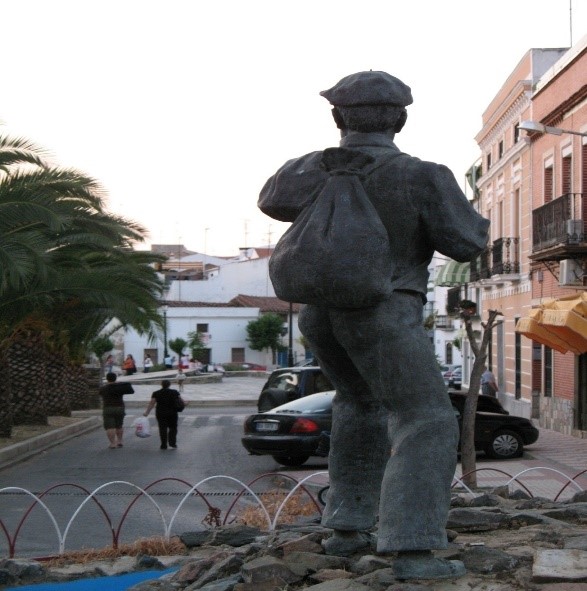
The evidence for such processes does not stop there, but develops new and original expression such as the sculptures in homage to the guardinhas (border guards) in Alcoutim, the sculptures in homage of the backpackers in Oliva de la frontera, the sculpture in homage to Manuel Rui Nabeiro, in Campomaior, the many smuggling routes advertised along different stretches of the border, the cross-border twinning of many rayana (border) towns, the cultural and music festivals which use the border as their main reference…