






The involution of human development: Iraq, 1990-2003
This Temporary exhibition looks at the vulnerability of living conditions for people during times of catastrophe, at the fragility of so-called «Human development», which we associate with improved health, education, basic wellbeing, and gender equality. Our example is Iraq in the 1990s and the catastrophe was the system of exhaustive sanctions imposed on the country from 1990 to 2003 —in this case, a decision by the international community.
In 1990, Iraq was a country with a dictatorial political regime, still suffering from the effects of the war with Iran (1980/88), but with notable socio-economic development. Iraq was a highly urbanised country, and its economy and employment was basically public sector, with a large, modern, and secular middle class, an average level of development, and a diversified economy (capable of producing household appliances or medicines), with a significant number of women involved.
Following the invasion of Kuwait by Saddam Hussein in August 1990, the United Nations (UN) Security Council (SC) immediately imposed a system of total sanctions on the country, a system which was mandatory for all the international community. As part of the global economy and dependent on trade, the country felt the effects of the sanctions straight away. The impoverishment of Iraqi society was widespread and absolute, and its large number of state employees and professionals —the men and women destined to promote democratic change in the country— sunk in poverty.
After the Gulf War in January/February 1991, with the Iraqi army expelled from Kuwait, the SC decided to keep the sanctions against Iraq in force, a situation which lasted until the invasion and occupation of the country in March 2003. The SC’s demands on the Iraqi Government to end the sanctions were three: recognition of the sovereignty of Kuwait, payment of reparations for the damage caused during the invasion of Kuwait, and the strategic demilitarisation of the country.
Thanks to Iraq’s significant compliance with these demands and particularly to the evident impact of the economic sanctions on the population, in late 1996 the SC allowed Iraq to export oil in a very restricted way and under strict financial control, the so-called «oil for food» Programme. Despite the name, the programme was more designed to enable Iraq to pay reparations to Kuwait and the multinational companies than to relieve the suffering of the Iraqi people: from oil revenues, between December 1996 and March 2003, 17 billion dollars were allocated to paying governments and companies, while each Iraqi received 60 cents a day in humanitarian aid.
Finally, the USA and the UK decided to occupy Iraq in 2003, a decision made after realising that the embargo had failed to put an end to Saddam Hussein’s regime. The occupation dismantled Iraqi institutions and installed a corrupt and sectarian regime, dominated by Shiites, which led to the expansion of Al-Qaeda’s Sunni Jihadism and the Islamic State, which cared little about Iraqi society. Social regression was absolute as regards the rights of children and women, and minorities. Iraq became the country with the highest absolute and a relative number of displaced people and refugees.
Information and figures below on the collapse of the Iraqi people’s living conditions basically correspond to those of the United Nations. When documents are available online link is included. Richard Garfield's 1999 report Morbidity and Mortality among Iraqi Children from 1990 through 1998: Assessing the Impact of the Gulf War and Economic Sanctions, UNICEF's 1998 Situation Analysis of Children and Women in Iraq and CARE International and Johns Hopkins University Center for International Emergency, Disaster and Refugee Studies's 2003 Humanitarian Assistance Capacity in Iraq: Part I A Situation Analysis and Literature Review expand the documents mentioned in the texts, providing data on the humanitarian impact of sanctions. The book by Hans-Christof Graf von Sponeck, UN Humanitarian Coordinator for Iraq from 1999 to 2000, A Different Kind of War: The UN Sanctions Regime in Iraq (Berghahn Books, 2006) is an essential work to know the mechanism and the impact of the sanctions regime on Iraq.
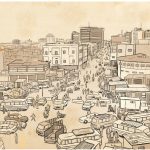
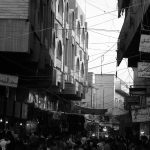
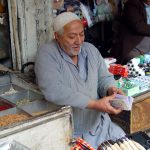
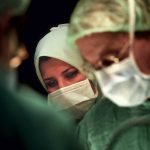
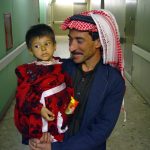
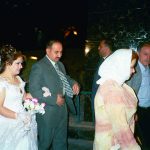
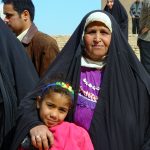
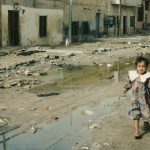
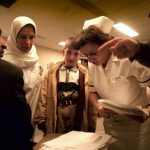
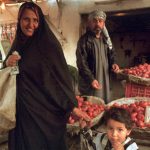
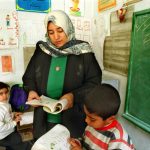
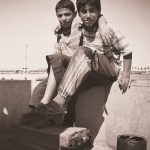
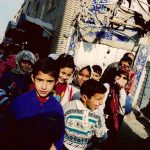
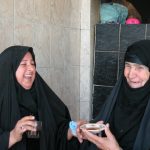
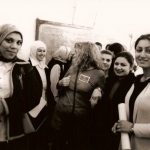
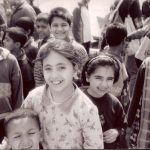
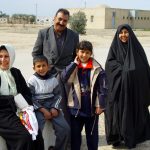
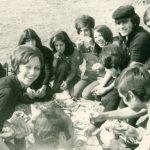
The photos were taken by private individuals and professional photographers on their visits to Iraq during the time of sanctions, until a few days before the start of the 2003 invasion. Of different qualities, they are an unprecedented testimony of those years.
Carlos Varea is a member of the Biology Department at the Universidad Autónoma de Madrid (Spain), president of the Association for the Study of Human Ecology, and co-director of the Virtual Museum of Human Ecology. Between 1991 and 2003, and again in 2005, he visited Iraq regularly.