

February 2026
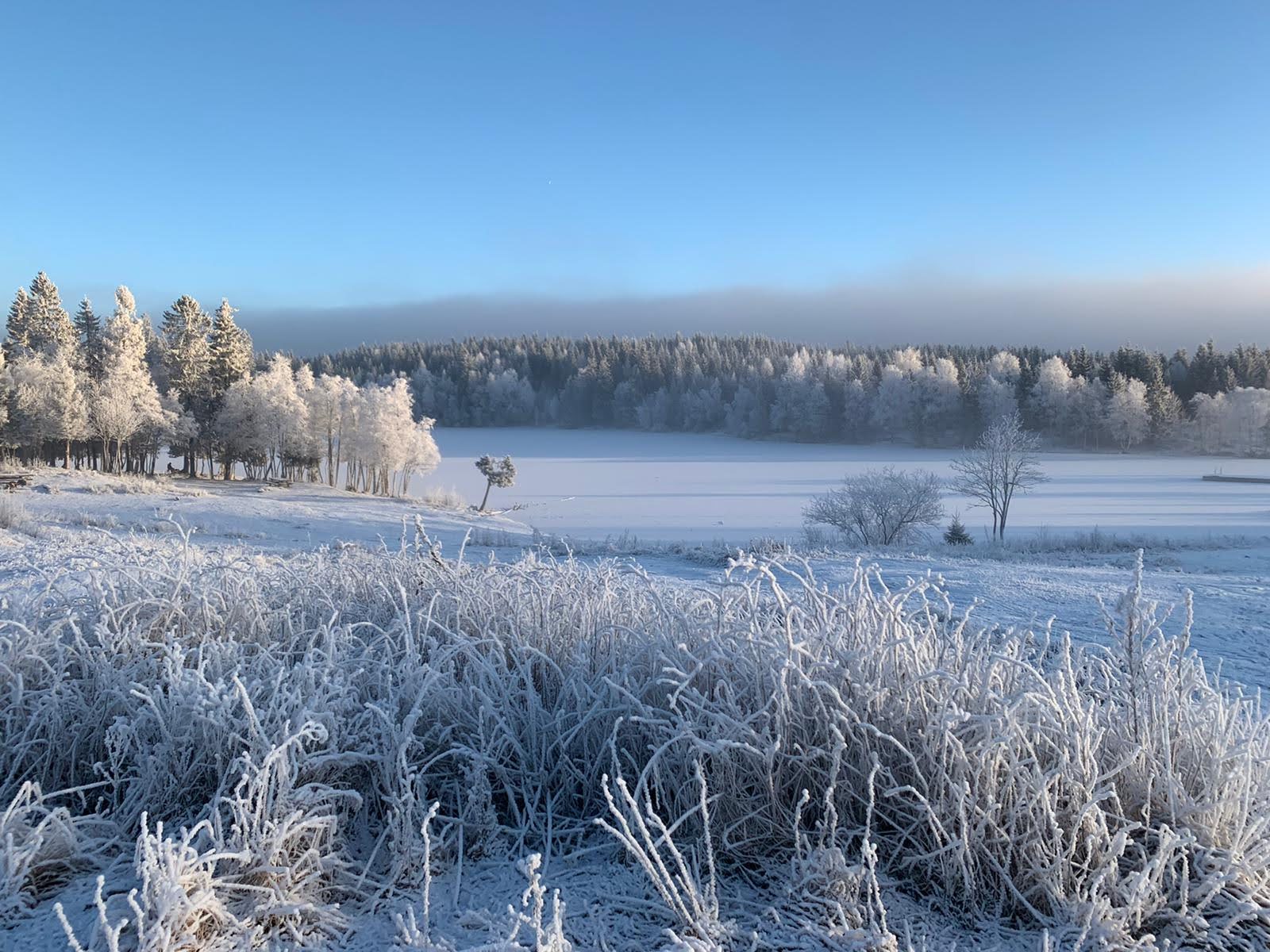 2020. Arctic landscape in Norway. Norway is one of the eight member states of the Arctic Council and is home to the Sámi people, an Indigenous population whose traditional territories also extend across Sweden, Finland and the Russian Federation. Photo: Johan Vibe © Johan Vibe
Justice and indigenous peoples in the Arctic: beyond geopolitics and the economy
For decades, the Arctic has been represented in our collective imagination as a pristine area, remote from and almost alien to human history: a landscape of ice and silence on the margins of the inhabitable world.
The 21st century has marked a turning point. As a direct result of climate change, the Arctic is no longer regarded as an inaccessible region but has become increasingly accessible. The accelerated receding of the sea ice, the opening of new sailing routes and access to previously inaccessible natural resources have generated a growing—and in many cases, overwhelming—interest in the economic, strategic and military opportunities offered by the region. This renewed interest has tended to focus analysis of the Arctic on its state and geopolitical dimension, frequently pushing its human dimension into second place.
However, the human dimension is essential for understanding the Arctic as it exists today. Far from being an empty or virgin space, the Arctic has been—since times immemorial—an inhabited, experienced and managed territory, both by the Indigenous peoples who have lived there for millennia, and through more recent political, strategic and economic dynamics which have now placed it at the centre of the global agenda.
Inuit, Sámi, Aleutians, Athabaskans, Gwich’in and many indigenous peoples of Siberia, among others, have, over thousands of years, developed sophisticated ways of adapting to one of the most hostile environments on the planet. Their traditional knowledge, social organisation and interaction with nature are an inseparable part of Arctic ecosystems.
The so-called encounter with explorers and settlers from other latitudes—particularly in the 19th and 20th centuries—had deeply traumatic consequences. Colonialism, the introduction of previously unknown diseases, dispossession of land and policies of forcible assimilation caused a breakdown of their social, cultural and linguistic structures. The conquest of the Arctic, symbolised by feats such as Robert E. Peary’s purported reaching of the North Pole in 1909, was based on a legal concept which considered these territories to be terra nullius, deliberately ignoring the presence and rights of the Indigenous peoples who lived there.
Against this history of marginalisation, the region boasts a notable experience of inclusive governance: the Arctic Council is the only international body where the organisations which represent indigenous peoples from the region take part as Permanent Participants. This status gives them the right to sit at the negotiating table together with the eight Arctic States, to participate in debates and to actively contribute to the drafting of policies and recommendations, although they do not have the right to a formal vote. This is a model without precedent in other regional and global contexts and constitutes an explicit recognition that Indigenous peoples are not mere groups affected by Arctic policies, but rather political actors with their own legitimacy.
This recognition becomes particularly relevant in the present context of accelerated climate change. The Arctic is warming at a much faster rate than other parts of the planet, and this is radically changing ecosystems and living conditions. The thinning and disappearance of sea ice directly affect key species and alter trophic chains in their entirety. For the Indigenous peoples, whose lifestyles are closely linked to such natural cycles, these changes bring consequences which go beyond the purely economic: they affect social cohesion, cultural transmission, physical and mental health and the very sense of belonging to the land.
Added to these impacts is the increase in human activity in the region. The extraction of oil, gas and minerals, the rise in shipping and the development of polar tourism intensify the pressure on a highly fragile environment. Although these activities generate income and jobs, they also bring important environmental and social challenges, especially when they are carried out without the effective involvement of local communities. In this context, it is not unusual for the Indigenous people to consider large extraction projects (even those linked to energy transition) as new forms of green colonialism, as they prioritise global objectives without sufficient attention to local realities.
In the middle of these dynamics lies a fundamental question: justice. For the Indigenous peoples of the Arctic, the profound changes that the region is undergoing—stemming from climate change, the intensifying of extraction activities, and geopolitical pressures—give rise to challenges that simultaneously affect four dimensions of justice: distributive, intergenerational, procedural, and recognition justice.
Regarding distributive justice, many Indigenous communities disproportionately bear the environmental and social costs of development—degradation of ecosystems, loss of hunting grounds and pastures, health risks—while the economic benefits—such as income or skilled employment—tend to accrue outside local communities or even outside the region.
Intergenerational justice, in turn, refers to the fact that for Indigenous peoples—whose cultural identity is closely linked to the transmission from one generation to another of traditional knowledge, practices and relationship with nature—the degradation of their environment does not just threaten their current way of life but also the very continuity of these peoples as culturally different communities.
As for procedural justice, the lack of effective means of participation, decision-making, and free, prior and informed consent erodes trust in institutions and weakens the legitimacy of the policies adopted, even when their objectives may be ecologically commendable, such as those associated to energy transition.
Finally, recognition justice raises the issue of respect and appreciation of Indigenous cultures, traditional knowledge, and ways of life.
Furthermore, all of this is unfolding against the backdrop of the international liberal order built after World War II. Core principles of contemporary international law such as the prohibition of threat or the use of force, equal sovereignty of States, or the rights of peoples to self-determination, among others, are increasingly called into question by authoritarian and mercantile dynamics, also in the Arctic, as illustrated by the current debate over Greenland in the context of the expansionist rhetoric and policies associated with the presidency of Donald Trump.
The Arctic is not an isolated geopolitical arena, nor is it detached to the rest of the planet. What is happening there—accelerated ice melt, pressure on fragile ecosystems, the search for resources and demands for social justice—foreshadows dilemmas that affect humanity as a whole. In this sense, the region functions like a mirror: it reflects the limits of our models of power and development, forcing us to rethink our relationship with nature, with the peoples who live there and with the future generations.
Elena Conde Pérez is a professor of International Public Law at the Universidad Complutense de Madrid (Complutense University of Madrid, Spain), director of the Diploma UCM in Polar Studies and research fellow at the Instituto Complutense de Estudios Internacionales (ICEI, Complutense Institute of International Studies).
Further reading:
Conde Pérez E. 2021. Las poblaciones indígenas del Ártico: realizaciones de su derecho de libre determinación, Anuario de los Cursos de Derechos Humanos de Donostia-San Sebastián, vol. XX, Tirant lo Blanch, pp.157-186.
Conde Pérez E. 2025. El futuro de la Unión Europea en el Ártico: retos de sostenibilidad social y consentimiento en la transición energética, Revista General de Derecho Europeo,65:186-221.
Conde Pérez E. 2025. Voces del Ártico y ambiciones de la Unión Europea ante una nueva política para la región ártica: una prueba de legitimidad, ICEO’ blog.
Proyecto H2020 JUSTNORTH, 2020-2023. Toward Just, Ethical and SustainableArcticEconomies, Environments and Societies, JUSTNORTH was a European research project funded by Horizon 2020, coordinated by Uppsala University (Sweden) and carried out by a consortium of 17 research centers, including the Complutense University of Madrid through the Complutense Institute of International Studies. Elena Conde led Work Package 6 (WP6), which focused on identifying how to introduce justice criteria into Arctic regulatory frameworks as a basis for sustainability. The project concluded with the preparation of a Recommendations Report for an integrated European Union Arctic Policy, a summary of which—prepared by the author for The Conversation—is available (in Spanish) at «Por un Ártico más justo y sostenible en la era del cambio climático» (2023).